
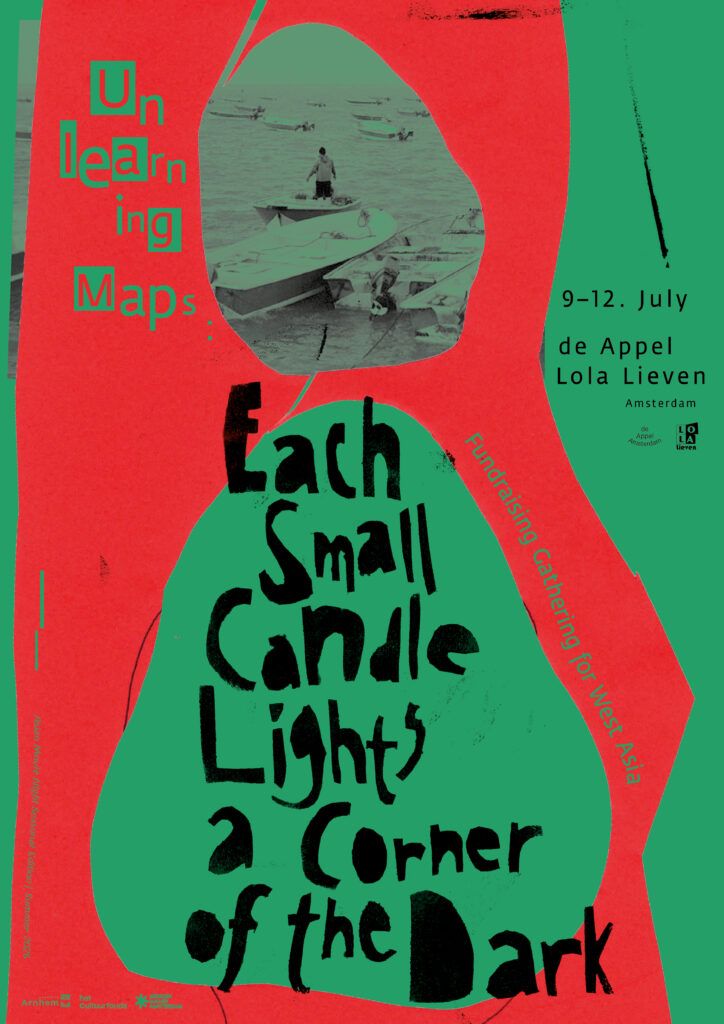
Unlearning Maps: Each Small Candle Lights a Corner of the Dark
You are warmly invited to four days of listening, gathering, collective unlearning, and fundraising in solidarity with communities across West Asia resisting genocide, settler colonialism, war, and mass violence.
You are warmly invited to four days of listening, gathering, collective unlearning, and fundraising in solidarity with communities across West Asia resisting genocide, settler colonialism, war, and mass violence. When genocide and war are narrated as inevitable, the language of justice is co-opted to justify imperial violence. This violence not only destroys lands and lives, but also captures the future, closes the horizon, and makes us believe there is no outside to the binaries imposed on us, no other possible future.
Solidarity, then, cannot mean simply choosing a side within the maps already given to us. Imperial powers, authoritarian governments, nationalist projects, media systems, and even oppositional narratives can all become entangled in reproducing domination and narrowing political imagination. The histories of marginalized peoples are often folded into these frameworks, but this does not delegitimize their struggles. It makes it more urgent to hold them carefully, and to build forms of relation, language, and solidarity that cannot be easily returned to imperial or authoritarian narratives.
This four-day gathering centers situated knowledge. Solidarity cannot flatten different struggles into one language. It must begin from where people stand, their histories, lands, wounds, survival, and limits of vision. Every community sees from somewhere. No position holds the full picture. Listening, then, is not distant sympathy, but a way of disturbing inherited maps. Across different histories and struggles, other geographies of resistance may become visible.
The program brings together documentary films, collective reading, performance, and a book launch, tracing histories and voices from Palestine, Rojava, Artsakh, Khuzestan, and Tehran. The films do not only reflect the present moment of crisis and conflict, but the longer historical formations and structural forces — displacement, ethnic marginalization, petro-capitalism, and the exclusions produced by national projects — that shaped these conditions and continue to shape them.
Harvesting
Throughout the gathering, we introduce the practice of harvesting, a collective method of processing, witnessing, and responding to what we experience together.
Fundraising
Across Palestine, Rojava, Lebanon, Iran, and Artsakh, communities continue to live through war, displacement, militarization, censorship, economic violence, and the long afterlives of colonial and authoritarian projects. Yet even under these conditions, people continue to make worlds: through art, teaching, care, collective survival, memory, and resistance.
The donations gathered through this program will travel to grassroots initiatives and communities whose struggles accompany this gathering.
We do not understand donation as charity detached from relation. We understand it as a gesture of solidarity, however partial and insufficient: a way of refusing distance, and of remaining accountable to the lives, struggles, and futures that this gathering asks us to witness.
If you are able to contribute, your support becomes part of the passage between here and there, between those who listen, those who remember, and those who continue to endure and create under conditions designed to make life impossible.
Each small candle lights a corner of the dark.
Ticket links
Program at Lola Lieven
Opening on Thursday at De Apple.Visit https://asianmovienight.com/Asian-Movie-Night-Unlearning-Maps for more information
Friday 10th | 15:00-22:30
Chapter One
From Here, From There
14:30 Doors Open
15:00 – 15:10 Introduction
15:10 – 16:35 Film Screening:
Happiness || dir: Fırat Yücel / 2025 / TR / 18’ / English, Turkish, Dutch, Serbian, Arabic w/ EN subtiles
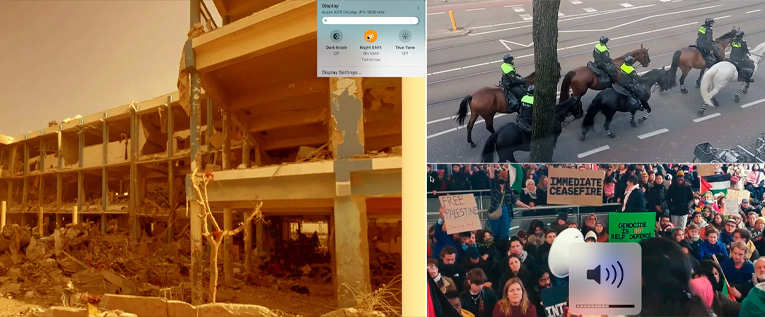
Happiness unfolds as a desktop documentary, tracing the experience of living through livestreamed genocide in Palestine, digital overload, and political unrest. Moving across browser windows, messages, and fragments of everyday life, the film reflects on how screens become sites of both exhaustion and mobilization.
Talk with Deniz Buga & Fırat Yücel
16:35 – 17:10 Discussion with the filmmakers
Seen Unseen: An Anthology of (Auto)Censorship || dir: Altyazı Fasikül: Free Cinema / 2024 / TR / 66’ / Turkish, English, Kurdish w/ EN subtitles
Following the suppression of the Gezi Resistance in 2013, which mobilised all aspects of the political spectrum, censorship and state’s violations of freedom of expression in Turkey has become increasingly severe. Seen Unseen: An Anthology of (Auto)Censorship is a collective contemplation by a group of filmmakers/artists from Turkey and the Netherlands, reflecting on the limits and boundaries of expression from behind the rising barriers of the last two decades.
Using different techniques, tactics, and interfaces such as desktop documentary, letter, photography, video-essay, reenactment, CCTV and online interviews; Seen Unseen focuses on the vital cinematic question of “to show or not to show”, exposing practices of and exploring the cause-effect dynamics between censorship and auto-censorship.
17:10 – 17:40 Break
Chapter Two
Geographies of Resistance
17:40 – 19:15 Film Screening from Subversive Film Archives:
Palestine, the Road to Tragedy || dir. Don Catchlove (From the Subversive Film Archive) / 1970 / UK / 21’ / Arabic w/ EN subs
Commissioned by the Arab League, the director Don Catchlove repurposes the colonial British archives to explore the Palestinian question, starting from the British Mandate and followed by the Palestinian uprising against the mandate and the creeping Zionist settlement project. Although made by a British director, the film is considered one of the early attempts to decolonise the archives in relation to Palestine, presenting a narrative of resistance that comes from within the archive itself, countering the Western narrative about the events that led to the colonisation of Palestine.
Scenes from the Occupation in Gaza || dir. Moustafa Abuali (From the Subversive Film Archive) / 1973 / LB / 13’ / Arabic w/ EN subs
A rare film by the legendary filmmaker Mustafa Abu Ali, one of the founders of the Palestine Film Unit, the first cinematic arm of the Palestinian revolution. Abu Ali edited this footage, originally shot by a French news crew, creating one of the earliest films about the occupied territories in the Gaza Strip. Scenes from the Occupation in Gaza uses experimental montage techniques to produce a film that is both cinematically and politically agitational. It was the only film produced by the Palestinian Cinema Group, which later became known as the Palestinian Cinema Institution in 1974.
Kuneitra: Death of a City || dir. G. Yacoub (From the Subversive Film Archive) / 1974 / UK / 26’ / Arabic w/ EN subs
Kuneitra: Death of a City was made by the American Peace Committee to document the UN-commissioned forensic investigation of the atrocities committed by the Israeli army in the town of Kuneitra in the occupied Golan Heights. Shots of the remnants of destruction of religious sites, graveyards and homes interlace interviews that were made with the town residents with their recollections of what had happened.
Kufr Shuba || dir. Samir Nimr (From the Subversive Film Archive) / 1975 / UK / 35’ / Arabic w/ EN subs
An iconic work produced by the Palestinian Cinema Institution in Beirut, directed by Iraqi filmmaker Samir Nimr. The film is named after the small village of Kfar Shouba in southern Lebanon, which became a site of solidarity between the Lebanese people and the Palestinian resistance after a battle that devastated the village. The film stands as an epic testimony to people’s love for their land, their steadfastness, and their struggle for liberation.
19:15 – 20:00 Dinner with Het Rode Keukentje
20:00 – 21:00 Film Screening
Perpetual Recurrences || dir. Reem Shilleh / 2016 / PL / 60’ / Arabic w/ EN subs
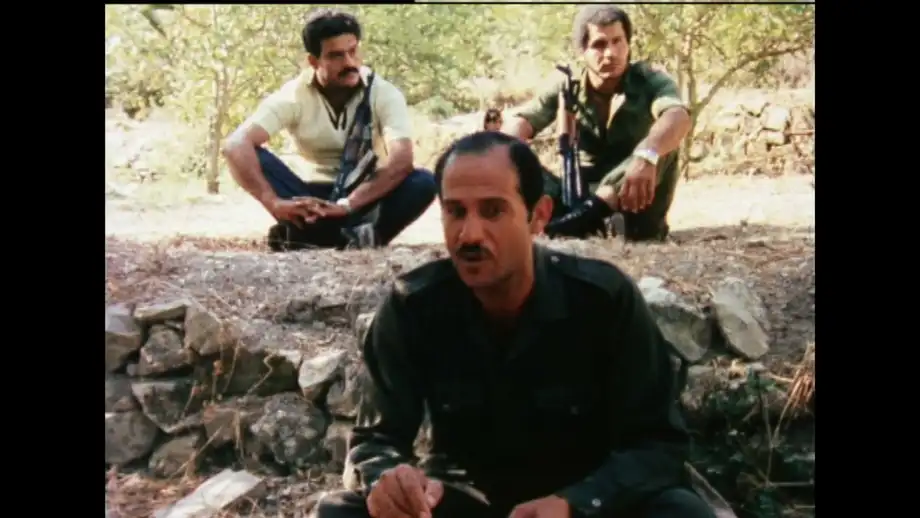
Four decades of filmmaking in and about Palestine come together in this montage by Reem Shilleh. The film tracks repetition in films by militant filmmakers from the Palestinian revolutionary period 1968–82 and in more contemporary films.
21:00 – 21:45 Discussion with a filmmaker
21:40 – 22:30 Wrap up with music and drinks
Saturday 11.07.2026 | 15:00-22:30
Chapter Three
Denialist Futurity
14:30 Doors Open
15:00 – 15:15 Introduction and Recap
15:15 – 17:45 Film Screening:
Black Back Artsakh || dir. Anastas and Rene Gabri / 2021 / AM / 150’ / Armenian and English w/ EN subs
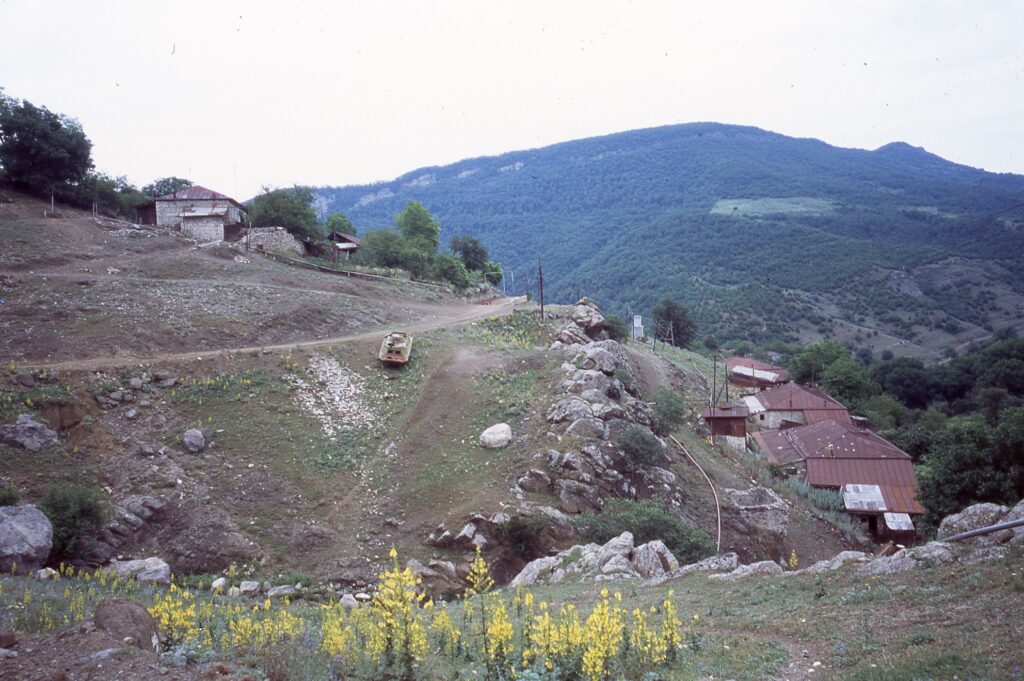
The film is based on interviews with inhabitants of Nagorno-Karabakh made in 2007, in a time between two wars. As in their earlier works shown in Forum Expanded, Ayreen Anastas and Rene Gabri work with different layers of time: In the past they edited and presented their films live. Here they use the temporal distance to re-evaluate old footage.
Black Bach Artsakh is the name of a world. It lives in and as a film. Those who view it not only inhabit it, but also care for it, keep it alive by keeping watch over it. In this way, it is not a film which so much resists the makers of war and those who deny and continue to justify genocide: it is a film which outlives them.
If film is a document, then it bears witness to a place and a time. For example: This film re-members events from a place called Artsakh in the year 2007—a middle point—exactly 13 years after the 1994 cessation of hostilities in the struggle for liberation and self-determination by Nagorno-Karabakh’s Armenian inhabitants, and 13 years before the 2020 invasion by Azerbaijan’s dictator, who enlisted Turkey’s military and several thousand mercenaries from Syria to conquer those same lands as his country’s sovereign domain.
Then film as a testament, which this film claims affinity with, is what unsettles the domain or reign of any sovereign or sovereignty. It inhabits a time, which is neither the linear one of history nor the make-believe one of fiction: but what some refer to as that of the eternal. For this, and rightly so, Johann Sebastian Bach has been assigned as its honorary composer.
17:45 – 18:30 Dinner
18:30 – 19:00
Collective reading: Denialistic Futurity || Text by Ayreen Anastas and Rene Gabri
This text and the concept of genocidal-denialist futurity has been developed initially as a way to confront Azerbaijan’s brutal invasion and ethnic cleansing of the Armenians of Artsakh, with the most recent invasion of September 19-20 2023. These genocidal acts have been perpetrated by Azerbaijan with the direct military support of Turkey and Israel. Turkey and Azerbaijan are autocratic regimes who are both based on the denial of the genocide their ancestors have perpetrated against Armenians.
19:00 – 19:30 Break
Chapter Four
No Friend but the Mountains Film
19:30 – 20:30 Film Screening and Talk
A Turtle in Ten Seconds || dir. Rojda Tuğrul / Bashur and Rojava / 10’ / EN subs
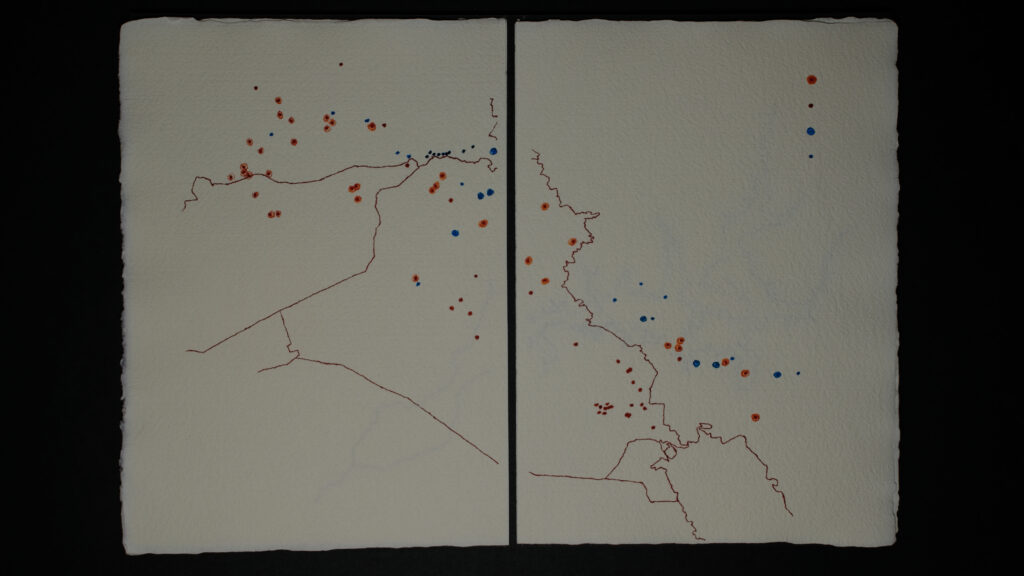
The film aims to capture different relationalities and temporalities of a particular place, around the Tigris and Euphrates rivers. It envisions both submerged and emerged elements in relation to the dam projects while the infant Mesopotamian soft-shelled turtle moves for ten seconds upside-down in a moment of water turbulence. The still images follow a desire to dilate and conceptualise an endangered species’ lifespan.
20:30 – 21:00 Break
21:00 – 22:00 Film Screening from Rojava Film Commune:
Letters from Shengal || dir. Dersim Zarevan (Rojava Film Commune) / 2021 / Bashur and Rojava / 80’ / Kurdish w/ EN subs
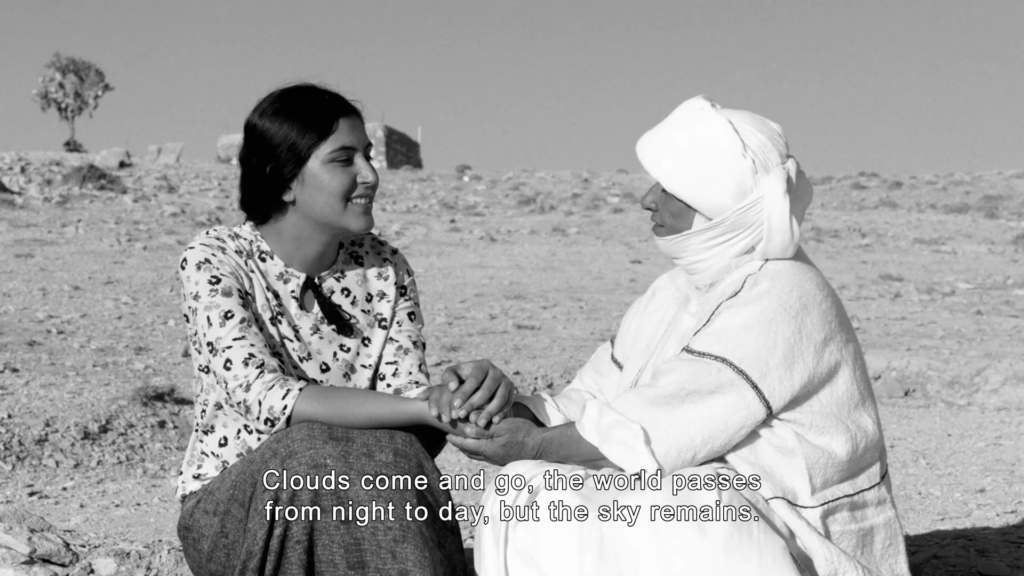
In the Summer of 2014, the Islamic State invaded Shengal, the Ezidi capital in Kurdistan (Iraq). The plan was to exterminate the ethnical/religious minority who were despised and called ‘devil worshippers’. 5000 Ezidi men have been killed, and 7000 women and children have been taken into slavery. This film tells Shengal’s liberation through the stories of five partisans who are five archetypes of the many who came to fight against the Islamic State from several different countries.
22:00 – 22:30 Wrap-up with music and drinks.
Sunday 12.07.2026 | 15:00-22:00
Chapter Five
Living in the Extraction Zone
15:00 – 15:15 Introduction and Recap
15:15 – 16:00 Film Screening
Gas, Fire, Wind || dir. Kamran Shirdel / 1986 / IR / 42’ / Persian w/ EN subs
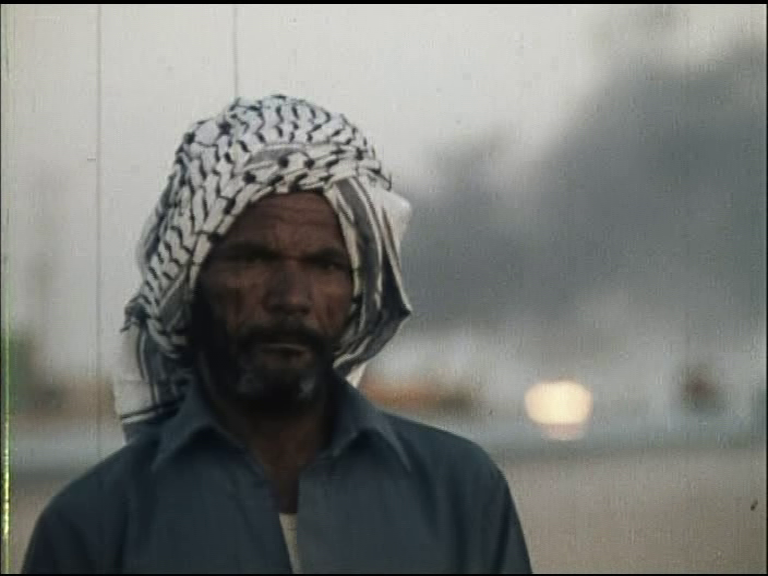
The film investigates the enormous quantities of natural gas burned off at Iranian oil fields. Through interviews with workers and local residents, together with Shirdel’s essayistic narration, the film examines oil extraction, gas flaring, waste, development, and the relationship between natural resources and foreign economic interests in Khuzestan.
Gas, Fire, Wind is one of the two “oil films” made by Shirdel for the Iranian oil industry after the Revolution.
16:00 – 16:15 Break
16:15 – 17:30 Film Screening
Meezan || dir. Shahab Mihandoost / 2023 / IR / 72’ / Ara
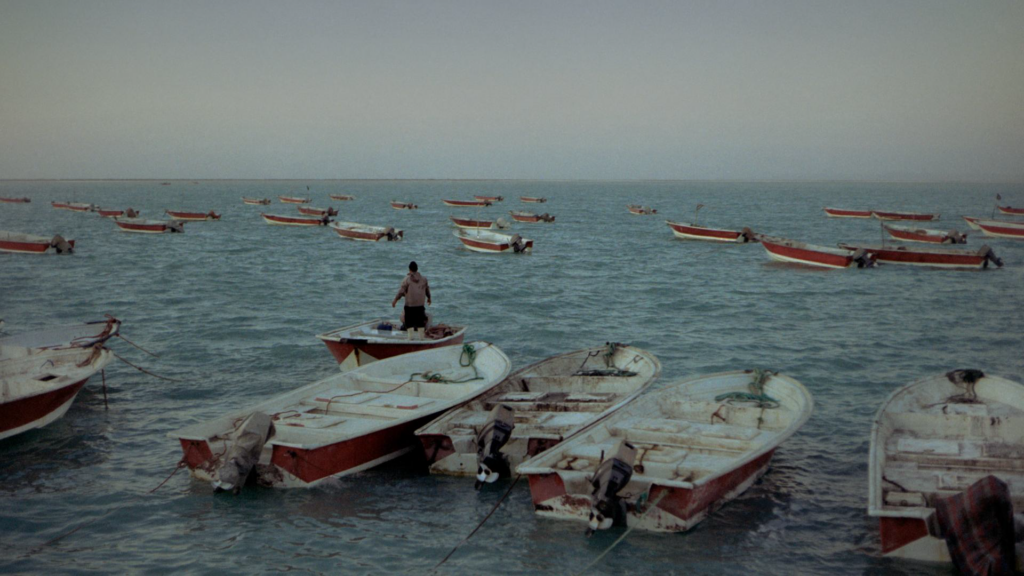
Set in south-western Iran, in the province of Khuzestan and bordering Iraq, Meezan (Scale) is an observational and immersive experience, a journey from the sea to the land, about labour at the margins of petro-capitalism in three chapters.
Departing from the shore of Abadan, the first oil company-town in the Middle East, it follows a group of Arab fishermen who exemplify the realities of maintaining intergenerational ways of living and working on the sea. The men lead us to Bahrakan harbour where they barter for their share of the catch. What is contemporaneously a meeting place for fishmongering was a site of arduous migration for refugees fleeing Abadan after the mass destructions of the Iran-Iraq War in the 1980s. Meezan concludes in a secluded shrimp processing plant on the outskirts of Abadan where women who are shuttled in from surrounding villages furiously peel and devein shrimps in their own race for wages.
Despite the massive industrialization of the region, waterways of Khuzestan remain a significant source of income for the native communities who are most intimately connected to these embattled landscapes, and Meezan is a reflection on the relation between bodies and scales to acknowledge the weight of the past and its consequences in the present.
17:30 – 18:15 Discussion with filmmaker
18:15 – 19:00 Dinner
19:00 – 20:00 Film Screening
Siege Your Besiege with Madness || dir. Sina Khanahmadi / 2024 / IR / 56’ / Arabic w/ EN subs
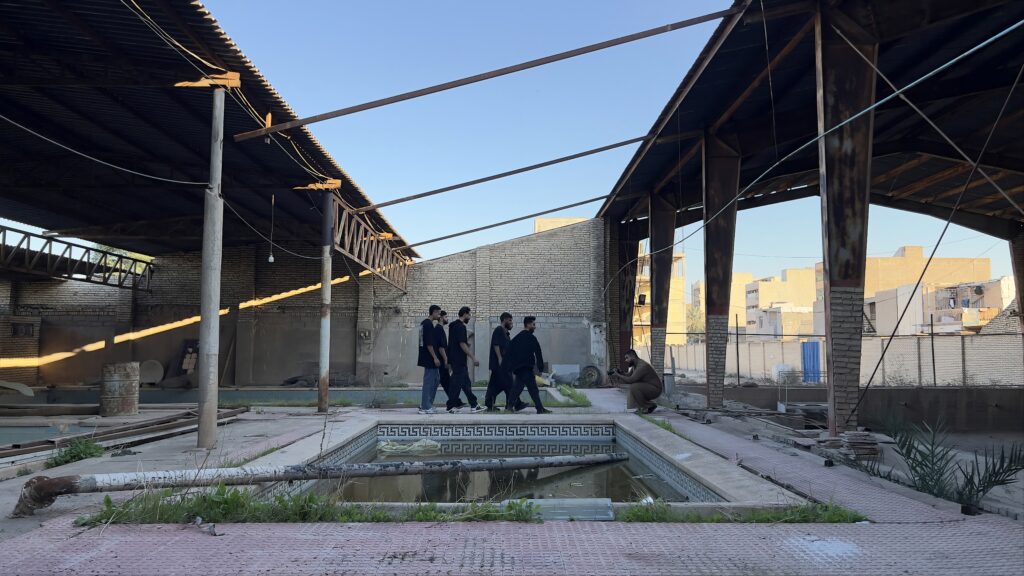
The new generation of Arabs in the city of Ahvaz has turned to rap music. Ahvaz is the capital of Khuzestan Province in the south of Iran, A strategic region where conflicts began after oil was discovered there around 1908. with diverse ethnic people including Arabs, Bakhtiyari, Persians etc.)
Arabic rap in Ahvaz doesn’t have a long history, but a group called “Emad Records” has been working in recent years to bring Arabic rap from Ahvaz into the spotlight.
In Iran, the official language is Persian, and other ethnic groups living in the country are not allowed to study in their native languages, which creates numerous challenges and difficulties for them.
Despite not being able to study or formally learn the rules of their native language in school, Arab rappers in Ahvaz strive to compose poetry and perform rap in their own language. Through their lyrics, they reflect on their issues and challenges.
Epilogue
Harvesting Workshop
A Letter in Return: Collectively Assembling Fragments into Letters of Solidarity
20:00 – 22:00 Harvesting Workshop